The landscape of 3D design is undergoing a profound transformation, driven by the relentless advancement of artificial intelligence. What was once the domain of highly skilled artists and engineers meticulously crafting every polygon is now being augmented, and in some cases, redefined by AI. At the forefront of this revolution is generative AI for 3D modeling – a technology capable of creating complex, intricate, and often stunning 3D assets from simple prompts, sketches, or even existing data. This paradigm shift promises not only to accelerate workflows but also to unlock unprecedented levels of creativity and accessibility in the world of digital design.
For decades, 3D modeling has been a time-consuming and labor-intensive process, demanding extensive training and patience. Designers would spend hours, days, or even weeks on a single model, refining shapes, textures, and topologies. While traditional methods remain invaluable, the emergence of generative AI is disrupting these established practices, offering a powerful co-pilot for creators. It's moving us from a world of direct manipulation to one of intelligent prompting and automated generation, opening new avenues for innovation across industries from gaming and entertainment to architecture, product design, and manufacturing.
Understanding Generative AI in 3D Modeling
At its core, generative AI for 3D modeling refers to AI models designed to produce new and original 3D content. Unlike traditional procedural generation, which relies on pre-defined rules, generative AI leverages deep learning techniques to understand patterns, styles, and structures from vast datasets of existing 3D models, images, or text descriptions. This allows it to "learn" how to create objects, environments, and textures that are not only novel but also coherent and often functionally viable.
The process typically begins with an input, which can be incredibly varied: a text prompt ("a cyberpunk city street at night"), a 2D image or sketch, a point cloud, or even a basic 3D mesh. The AI then processes this input, often employing techniques like Generative Adversarial Networks (GANs), Variational Autoencoders (VAEs), or Diffusion Models. These models iteratively refine and generate 3D data, whether it's geometry (meshes, voxels, SDFs), textures, materials, or even entire scene layouts. The output can range from abstract forms to photorealistic objects, ready for further refinement by a human designer or direct integration into a project.
This capability fundamentally changes the entry barrier to 3D creation. It allows concept artists to rapidly visualize ideas, architects to explore countless design iterations, and game developers to populate virtual worlds with diverse assets much faster than ever before. The power lies in its ability to synthesize complex information and translate high-level concepts into tangible 3D forms, dramatically reducing the manual effort involved in the initial stages of design.
Revolutionizing the Design Workflow and Creativity
The impact of generative AI for 3D modeling on the design workflow is profound and multifaceted. It's not about replacing designers but empowering them with tools that amplify their capabilities and creativity.
- Accelerated Prototyping and Iteration: Imagine needing 50 variations of a chair design for an interior visualization. Manually creating these would be prohibitive. Generative AI can produce dozens of diverse models based on a few parameters in minutes, allowing designers to rapidly explore a vast design space and identify optimal solutions. This speeds up the concept phase exponentially, enabling more thorough exploration before committing to a specific direction.
- Breaking Creative Blocks: Sometimes, even the most seasoned designers face creative stagnation. AI can act as a muse, generating unexpected forms or compositions that spark new ideas. By providing novel starting points, it encourages designers to think outside conventional boundaries and discover innovative aesthetics. This collaborative approach enhances the creative process, as detailed in our article Unlocking Creativity: Generative AI in 3D Design.
- Handling Complexity with Ease: Generating intricate geometries, organic shapes, or highly detailed environments is notoriously difficult. Generative AI excels at this, producing complex patterns, biological forms, or detailed architectural elements that would be extremely challenging, if not impossible, to model by hand. This is particularly valuable in fields like parametric design, bio-inspired architecture, or creating fantastical creatures for entertainment.
- Optimization and Performance: Beyond aesthetics, generative AI can be trained to produce functionally optimized designs. For instance, in engineering, it can generate lightweight structures that maintain structural integrity (topology optimization), or design components for optimal airflow or heat dissipation. This ability to integrate performance criteria directly into the generation process adds immense value to industrial design and manufacturing.
- Democratizing Access: With user-friendly interfaces, even individuals without extensive 3D modeling experience can begin to generate impressive assets. This democratization opens the doors for more people to participate in 3D content creation, fostering a broader community of digital artists and innovators.
Practical Applications and Emerging Tools
The applications of generative AI for 3D modeling are rapidly expanding across numerous industries:
- Gaming and Virtual Worlds: Game developers use AI to generate entire environments, populate levels with diverse assets (trees, rocks, buildings), create variations of characters or NPCs, and even design complex level layouts, significantly reducing development time and cost.
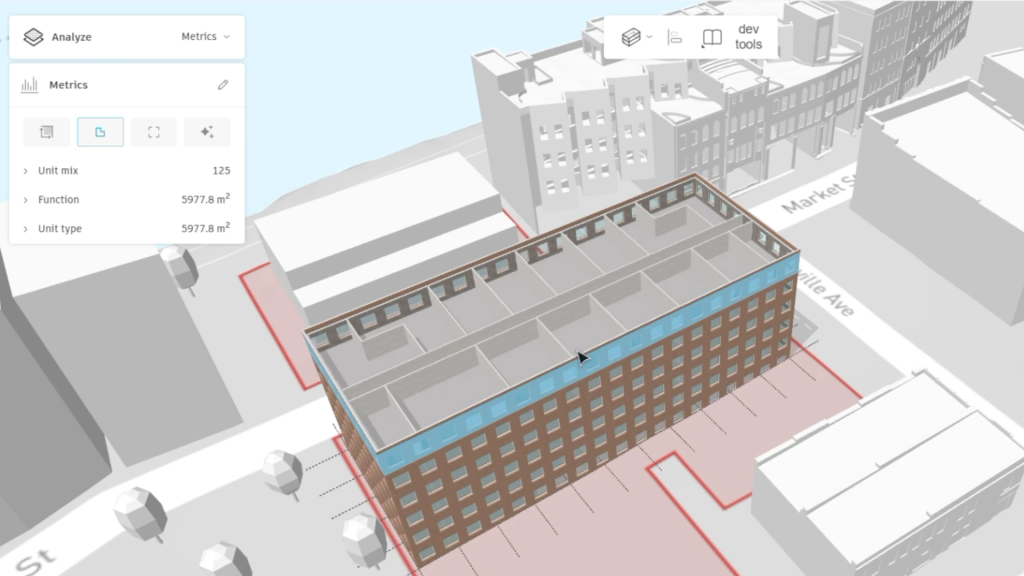
- Architecture and Urban Planning: Architects can leverage AI to generate floor plans, façade variations, or even entire building complexes that adhere to specific constraints like sunlight, material cost, or functional requirements. Urban planners can visualize different city growth scenarios.
- Product Design and Manufacturing: From conceptualizing new furniture designs to optimizing industrial parts for 3D printing, AI aids in rapid prototyping, material reduction, and creating highly customized products tailored to individual user needs.
- Entertainment and VFX: Filmmakers and animators utilize generative AI to create realistic landscapes, generate crowds of unique characters, or design props and sets with intricate details, enhancing visual fidelity and narrative possibilities.
- Fashion and Apparel: AI can help design unique clothing patterns, simulate fabric drapes, or generate new accessory ideas, pushing the boundaries of wearable art.
The market is seeing a surge of tools and platforms integrating generative AI. Companies like NVIDIA with their "Instant NeRF" and "GET3D" are pushing image-to-3D capabilities. Research projects like DreamFusion from Google allow text-to-3D generation. Beyond these, numerous startups are developing specialized AI tools for specific design niches, from character creation to architectural visualization. Designers today can experiment with cloud-based AI art generators that extend into the 3D realm, offering initial meshes or textures from simple textual descriptions. For a deeper dive into the tools available, explore our related piece: 3D Creation Revolution: Exploring Generative AI Tools.
Practical Tip for Designers: Start experimenting! Many generative AI tools offer free tiers or trials. Begin with simple text prompts, explore how different keywords influence the output, and then learn how to refine the AI-generated assets in traditional 3D software. Think of AI as a powerful brainstorming partner that provides an excellent starting point, saving you the initial blank canvas dread.
The Future Landscape: Challenges and Opportunities
While the potential of generative AI for 3D modeling is immense, its widespread adoption also presents challenges and opens new opportunities.
Challenges:
- Control and Precision: Currently, AI-generated models often require significant human refinement to meet specific aesthetic or technical standards. Achieving precise control over every detail remains a hurdle for completely autonomous generation.
- Data Quality and Bias: The quality of AI output is heavily dependent on the training data. Biases in datasets can lead to repetitive, uninspired, or even flawed designs. Ensuring diverse and high-quality training data is crucial.
- Ethical and Ownership Concerns: Who owns the copyright of AI-generated art? How do we attribute inspiration when AI draws from vast swathes of existing human-created content? These legal and ethical questions are still being debated and will require clear frameworks.
- Learning Curve: While AI lowers the barrier to entry, mastering prompt engineering and effectively integrating AI tools into an existing pipeline still requires new skills and adaptability from designers.
Opportunities:
- Enhanced Collaboration: AI can facilitate better collaboration between designers and non-designers, allowing clients or stakeholders to generate initial concepts themselves, providing clearer direction.
- New Job Roles: The rise of AI will create new roles such as "AI prompt engineers" who specialize in crafting effective prompts, "AI-assisted designers" who blend traditional skills with AI, and "AI model curators" who manage and refine AI datasets.
- Hyper-Personalization and Mass Customization: AI makes it feasible to create unique 3D models for every individual, from personalized avatars in virtual worlds to custom-fit products in the physical realm.
- Focus on Higher-Level Design Thinking: By automating mundane and repetitive tasks, designers can spend more time on strategic thinking, conceptual development, and adding the unique human touch that AI cannot replicate – empathy, storytelling, and nuanced aesthetic judgment.
The future of design with generative AI is not a dichotomy of human vs. machine, but rather a synergy. It's about combining the efficiency and generative power of AI with the intuition, creativity, and critical thinking of human designers.
Conclusion
The integration of generative AI for 3D modeling marks a pivotal moment in the history of design. It's accelerating workflows, unlocking new creative avenues, and making 3D creation more accessible than ever before. While challenges related to control, ethics, and skill adaptation remain, the opportunities for innovation are boundless. Designers who embrace this technology, learning to collaborate with AI rather than compete against it, will be at the forefront of shaping the next generation of digital and physical worlds. The future of design is not just AI-powered; it's intelligently co-created, pushing the boundaries of what's possible and redefining the very essence of creativity in the digital age.